What is Durup? Korean Angelica Tree Shoot (두릅)
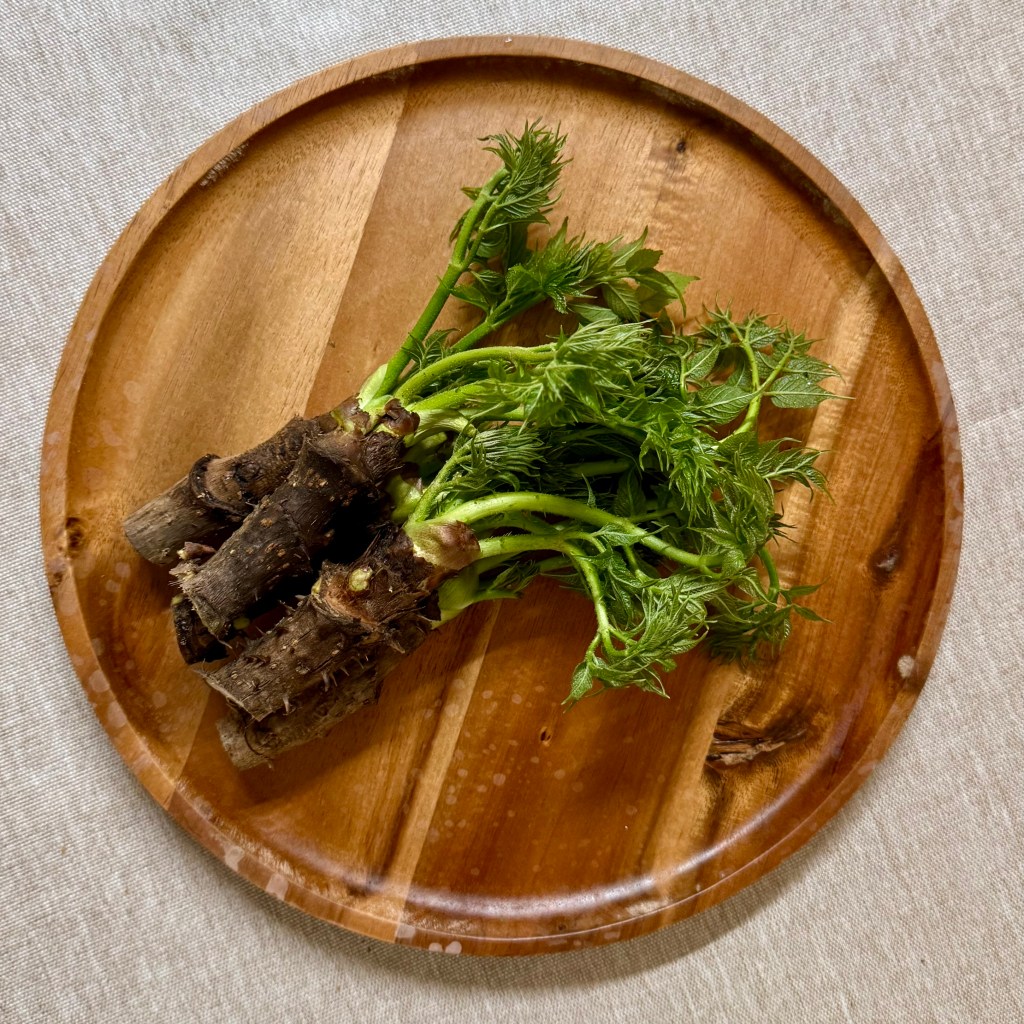
Durup (두릅) is a young shoot of the angelica tree, harvested in early spring in Korea.
It is considered one of the most representative seasonal wild vegetables, often gathered from mountains and enjoyed for a short time each year.
Durup has a firm texture and a distinct aroma — slightly bitter, nutty, and deeply herbal.
This bitterness is not unpleasant, but refreshing, and is often associated with the arrival of spring.
⸻
Texture and Flavor
When prepared properly, durup (두릅) is tender with a slight snap.
The flavor is:
• gently bitter
• nutty
• fresh and aromatic
The bitterness is an important part of its character and is usually balanced rather than removed.
⸻
Preparation
Durup is typically briefly blanched (데침) before eating.
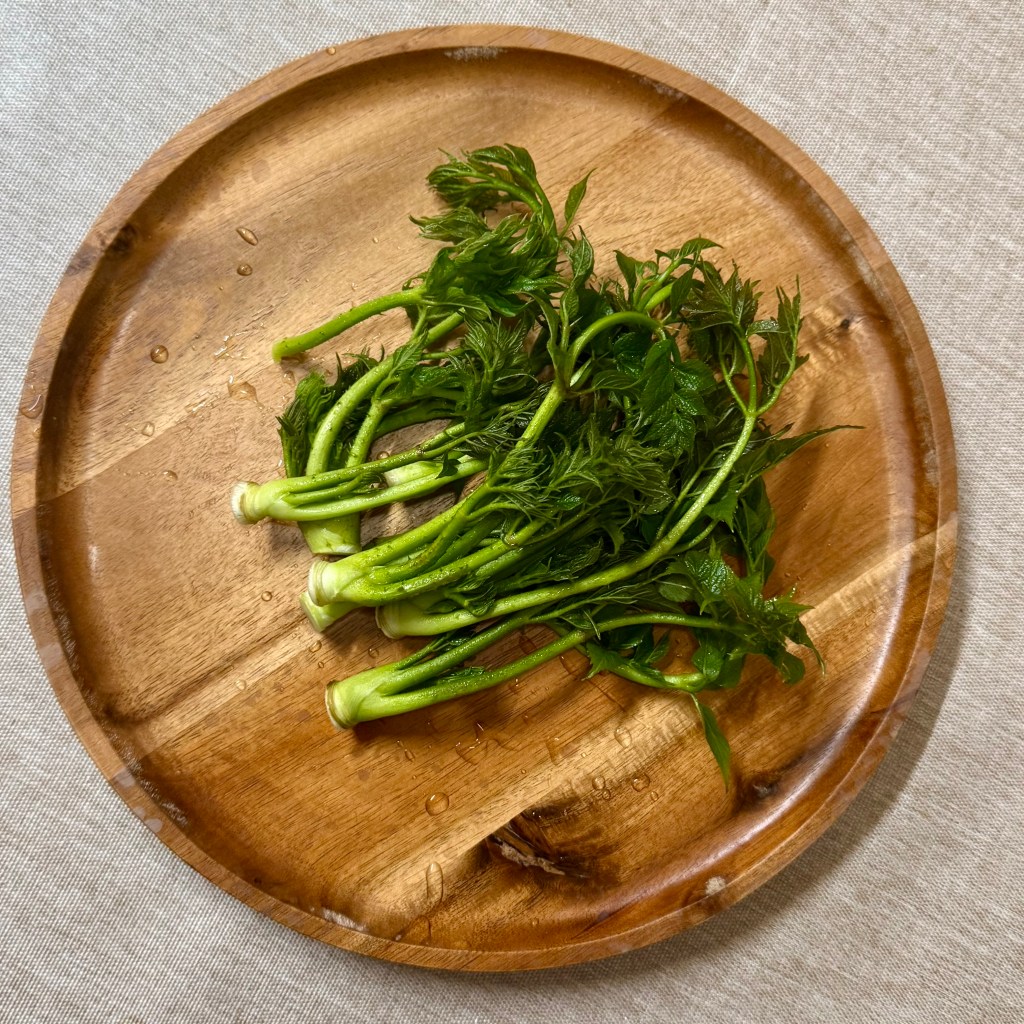
This softens the texture and slightly reduces bitterness while keeping its fresh aroma.
The shoots have small thorns, so they should be handled carefully and trimmed if necessary.
After blanching, it is often:
• served simply
• lightly seasoned
• or paired with dipping sauces
⸻
Ingredients That Pair Well With Durup
Because durup (두릅) has a stronger and slightly bitter flavor, it pairs well with ingredients that provide richness or contrast.
One of the most traditional pairings is fermented soybean paste (doenjang, 된장).
The deep, savory flavor of doenjang balances the bitterness of durup and enhances its nutty character.
Another common pairing is chogochujang (초고추장), a sweet and tangy red pepper sauce that contrasts with the herb’s bitterness.
Other ingredients that work well include:
• sesame oil (참기름)
• garlic (마늘)
• soy sauce (간장)
• tofu (두부)
These combinations are usually kept simple so the seasonal character of durup remains clear.
⸻
How It Is Often Eaten
Durup is most often eaten in very simple forms:
• blanched and dipped in sauce
• served as a light vegetable side dish
• paired with rice
In Korean cooking, durup is appreciated for its bitterness and seasonal freshness, rather than richness.
⸻
A Short Note on Seasonality
Durup is available only for a short period in spring.
Because of this, it is often treated as a seasonal delicacy — something to be enjoyed simply, without heavy seasoning.
 Wild Greens Kitchen
Leave a comment